
(From L to R) Frankie Howerd, Hugh Paddick, Kenneth Williams.
I recently commented on a YouTube reaction video, where an American was responding to a video that focused on ‘Britishisms That Confuse the Rest of the World’. Funnily enough, I discovered the use of euphemisms is confusing to some Americans, so was prompted to explain why we use them, and how their use became popular. What isn’t always appreciated is that there’s a deeper reason for why we use these obscure and sometimes vague terms, and it impacts upon how us Brits are ‘wired’, shaped by our culture, our background and the historic evolution of our society up to today. This is often bypassed when people try to explain our sense of humour, so here are my thoughts.
We love euphemisms and innuendo here in the UK. Given how our society was traditionally structured around social class, where different layers in society were made up of homogenous groups of people (defined by their lineage, heritage, wealth, education, occupation, and even religious affiliation) each of which was deemed to have certain values, behaviours, and levels of culture and ‘sophistication’. We were all judged by each other on how we spoke, looked, and conducted ourselves – it helped place where we were in the ‘social pecking order’ and our standing in society.
One of the defining aspects about how you were judged was by your politeness and manners. We were brought up so that if you learnt and displayed good manners and observed ‘acceptable’ behaviours, this would help you be received (or at least tolerated) in wider society. Conducting yourself with decorum and politeness along with ‘speaking properly’ could transcend the limitation of traditional class barriers, possibly improving your position, enhancing your status, and opening doors to new opportunities. Use of some terms are acceptable in some parts of society and within certain communities but not others, so ‘safe’ words and terms were adopted to avoid causing offence or upset and thereby being judged negatively, where you could be ‘downgraded’ in the eyes of others, or stonewalled and stigmatised by those with whom you were trying to build a relationship.
So a typical example would be replacing the basic terms of needing to use the toilet, with something less graphic when somebody needed to ‘answer the call of nature’. The request would be couched in less specific and more inane phrases such as ‘visiting the loo’ or ‘spending a penny’. And if someone’s need to ‘visit the bathroom’ is clearly audible before they speak or express that wish, then an unflustered “More tea vicar?” by the hostess has become a popular euphamistic retort to neutralise embarrassment in the room and subtley nudge the suffering person in the direction of the ‘little boys/girls room’.
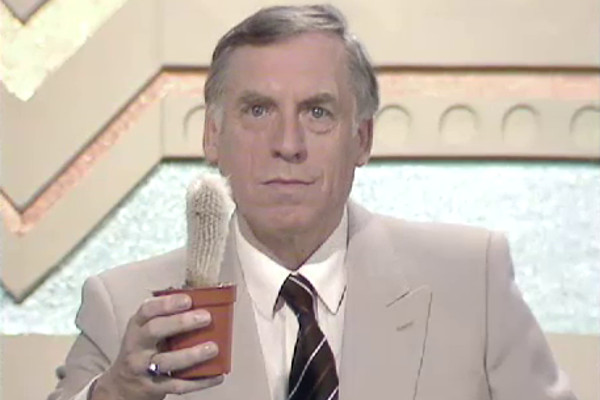
Larry Grayson
On the flip side of such a structured, nuanced society, was the undercurrent of flawed and honest humanity where everyone enjoys a good laugh, whatever background you come from. This invariably includes being rude and mentioning taboo subjects. So, to be able to have a laugh while in polite society and not compromise your ‘respectable’ status, use of euphemisms allow for sharing the crude humour but without using unsavoury language, which could dent your respectability and acceptability to others.
Equally, both euphemisms and innuendo were used to side-step the censors as radio, cinema, and TV became prevalent in the 20th century – so actors, tv shows, performers etc could create comedy without being censored. This was and remains funny today as we see someone getting away with saying something ‘unacceptable’ (by public standards) or risqué in an ‘acceptable’ way. Subverting authority by adopting this amusing method is something us Brits love doing, and you’ll hear it at work, at school, everywhere. It’s also a great way of bonding with others. Those who get the references and appreciate your use of a cleverly disguised, yet seemingly innocent term (loaded with hidden meaning) is an attractive quality, and is part of how us Brits build friendships and alliances with our family, friends and peers.
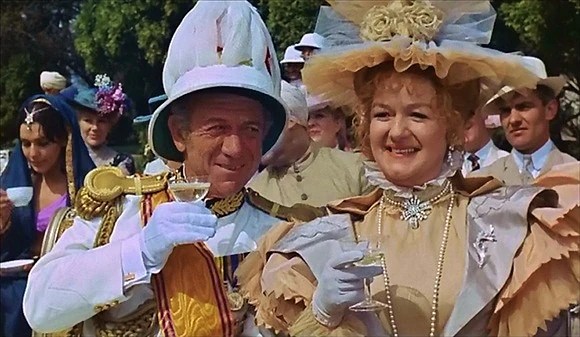
Sid James and Joan Sims in ‘Carry On Up the Khyber’
And the ‘get out’ of using either euphemisms or innuendo in order to avoid ‘punishment’ or censorship, is you refer to its original acceptable meaning not its implied ‘unacceptable’, contentious, or rude meaning. It’s a skill and craft we’re brought up with and continue to hone and embellish throughout our lives – a guaranteed catalyst for laughter and acceptance.
 Mark Batchelor